Ohio Water Outages, October 17, 2026: Reports and EPA Records
30 Ohio water outage reports on October 17, 2026, set against EPA records for nine major Ohio water systems, with what to do during an outage.
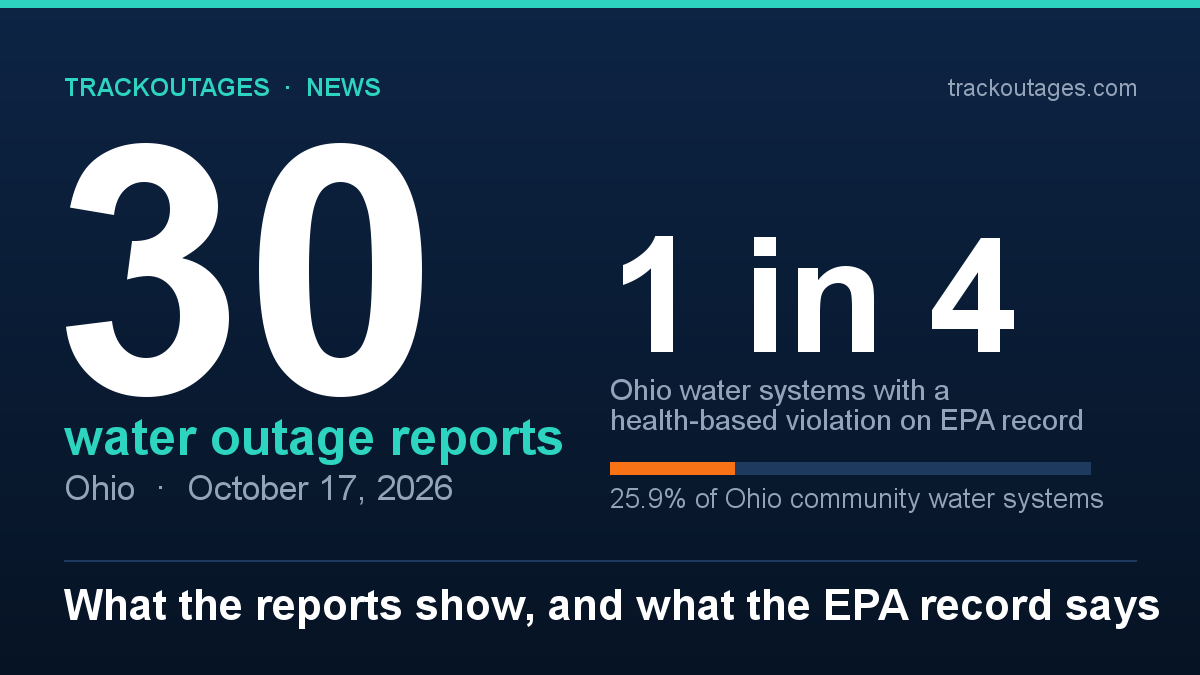
30
water outage reports from Ohio on October 17, 2026
1,125
community water systems in Ohio on the EPA record
10.5 million
Ohioans served by those systems
1 in 4
Ohio systems with a health-based violation since 2015
What happened in Ohio water on October 17, 2026
TrackOutages recorded 30 water outage reports from Ohio on October 17, 2026. Each one is a resident telling us their water service is out or failing where they live. The count is a measure of where people are noticing problems. It is not a utility-confirmed outage count, and it does not show how many homes were affected or how long service took to return.
Why Ohio water outages happen
Water outages in Ohio's large cities usually trace back to three conditions that show up in the public record.
- Cold weather. Akron averages about 128 days a year with a low at or below 32°F, based on NASA POWER data for 2015 through 2025. Frozen service lines cause single-address outages, and freeze-thaw cycles crack older mains and cause street-wide breaks.
- Old pipe. In Akron, 73% of occupied homes were built before 1970, against 35.5% nationally. Streets of that age often sit on cast iron and early steel mains that are near or past their design life.
- Power and treatment. Systems that draw surface water need treatment plants and pumps running around the clock. A power cut at the plant can lower pressure across a whole service area, not just one street.
The EPA record for nine major Ohio systems
The U.S. Environmental Protection Agency keeps the Safe Drinking Water Information System (SDWIS), which lists every community water system in the country. Ohio's 1,125 community systems serve about 10.5 million people. The nine systems below are the major ones TrackOutages tracks city by city.
Health-based violations are the entries that bear on drinking water quality. Monitoring and reporting entries are paperwork items, such as a missed sample or a late report.
| Water system | People served | Water source | Health-based violations | Monitoring and reporting entries |
|---|---|---|---|---|
| Cleveland Public Water System | 1,308,955 | Surface water | 0 | 9 |
| Columbus Public Water System | 1,305,946 | Surface water | 1 | 0 |
| Cincinnati Public Water System | 750,200 | Surface water | 0 | 0 |
| City of Toledo | 360,000 | Surface water | 1 | 2 |
| Akron City Public Water System | 280,000 | Surface water | 1 | 3 |
| Dayton Public Water System | 141,407 | Surface water | 0 | 0 |
| Youngstown City Public Water System | 130,530 | Purchased surface water | 0 | 1 |
| Canton Public Water System | 107,113 | Groundwater | 0 | 2 |
| Lorain City Public Water System | 64,152 | Surface water | 0 | 1 |
Source: EPA SDWIS. Population is the service population EPA lists for each system.
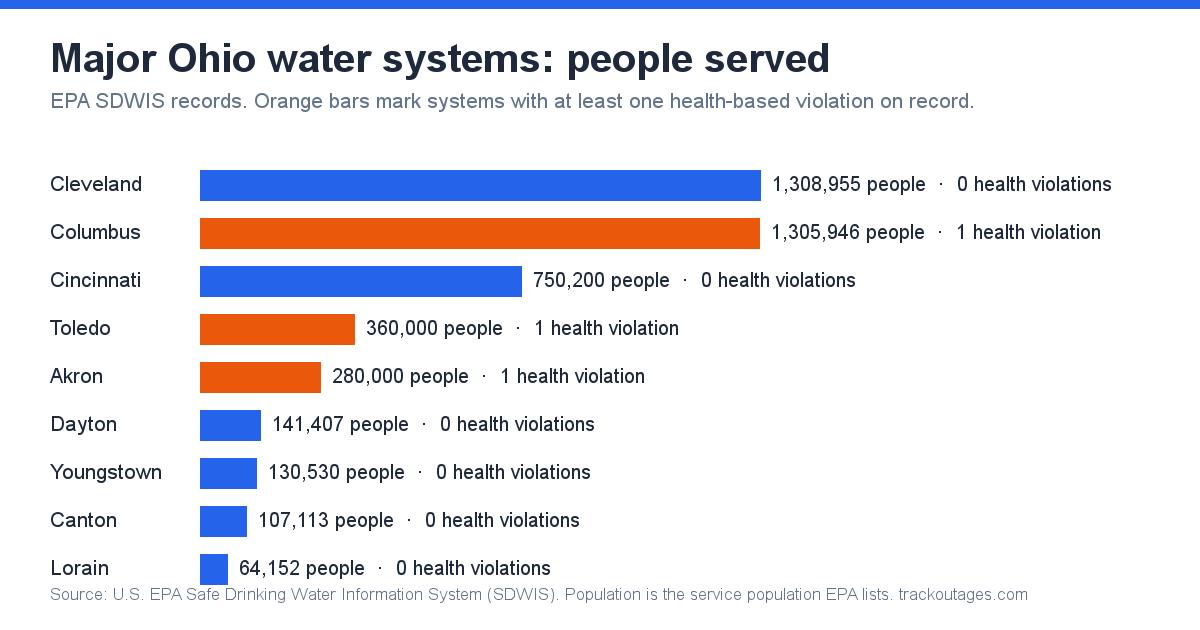
Three systems with a violation on record
Three of the nine systems have one health-based violation each:
- Columbus: drinking water above the legal limit for nitrate, June 2016.
- Toledo: treated water above the monthly turbidity limit, March 2023.
- Akron: drinking water above the legal limit for haloacetic acids, July 2025. EPA marks this entry resolved.
A violation on the record is not an outage. EPA logs water quality and reporting problems. It does not log main breaks, pressure losses or shutoffs, so none of these entries explains why a street lost water on a given day.
What to do during a water outage in Ohio
- Call your utility first. The utility named on your bill posts restoration estimates for large breaks. TrackOutages shows the reports, not the repair schedule.
- Watch for a boil water notice. If one is issued, bring tap water to a rolling boil for one minute before you drink it, brush your teeth or make ice. Let it cool and keep it covered.
- Store water before a planned shutdown. Fill the bathtub and a few large containers. Stored water is for flushing toilets and washing, not drinking, unless a notice says it is safe.
The water outage guide covers the rest, and the Ohio water outage page lists the cities we track.
What this article does not show
The 30 reports are one day's count from people who use TrackOutages. No utility has verified them. A visitor can submit up to eight reports a day, one every 30 minutes for the same city, so a cluster can come from a few people on one street. Read the count as a sign of where problems are being noticed. The methodology page explains our limits in full.
Sources: U.S. EPA Safe Drinking Water Information System (SDWIS) for system records, population and violations. NASA POWER daily data for the Akron weather figures. TrackOutages user reports for the count of 30 reports on October 17, 2026.